
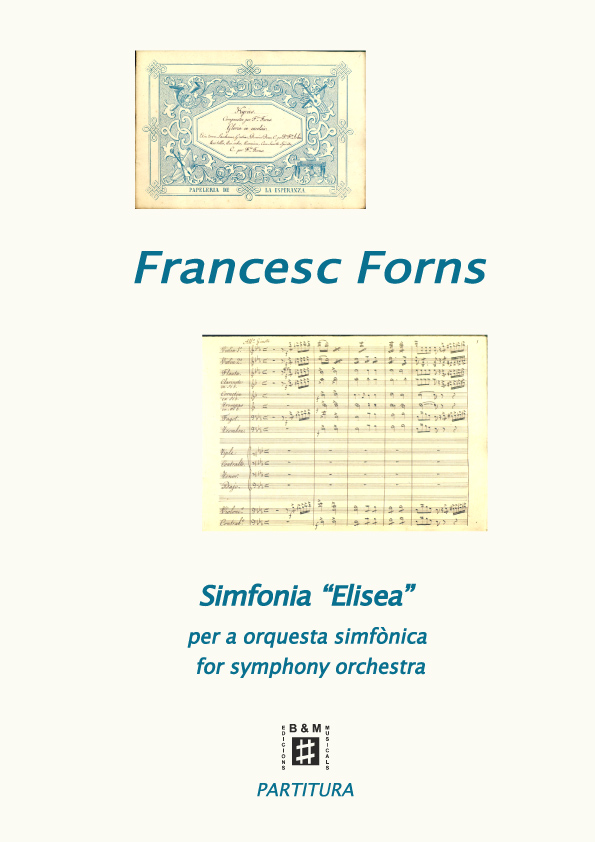
Description
Author
Format
Instrumentation
Plantilla
Duration
Pages
Year of composition
ISMN
Ref.
The work we present is a symphony in a single movement, written in the key of D major, with moments of strong presence of brass instruments. In fact, in addition to horns and trumpets, the instrumentation includes flugelhorns and trombones. Although we cannot date the work with the information we have, the use of more brass instruments leads us to believe that it must have been composed in the 1860s.
The themes that make up this symphony suggest the German and French influence that the musicians who were part of the operatic scene in Barcelona must have had. Wagnerian and Beethovenian sounds are clearly perceptible in the first two themes of the symphony. In contrast, in the third, more playful theme, a certain Mozartian or Rossinian influence can be appreciated.
In the score we present here, we have chosen to write the transposing instruments in their current transposition: that is, clarinets and trumpets in B flat, and horns in F. We have also altered the order of the staves in the orchestral template. Specifically, we have placed the string sections in the lower positions of the score, as is customary today.
At bar 120, there is a change of key to A major. Around bar 145, a rhythmic cell consisting of an eighth note and two sixteenth notes appears for the first time, followed by a tied quarter note with a repetition of the same cell, accompanied by eight eighth notes in the following bar. This rhythmic cell is accompanied by a long orchestral crescendo.
Although we do not know if it was performed during the composer’s lifetime, we can imagine that it is a work that could have been used at some point during the Liceu evenings, when the works were shorter, and there was a need for brief, well-written pieces that would make the wait more pleasant for the bourgeoisie who were waiting to hear the works.


There are no reviews yet.